How Much Insulation: Guide to work out quantities
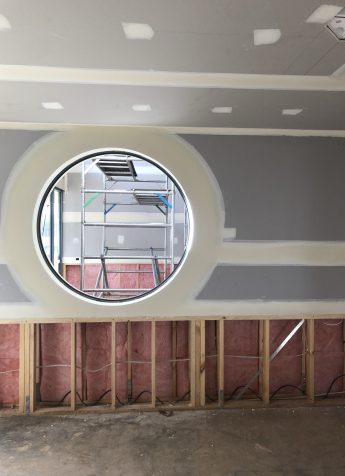
Ok, so you have demolished all your walls in your bedroom and you are now ready to plaster them with new Gyprock plasterboard. One major component you should really consider is am i going to insulate. Me personally i would insulate every wall in my house and as we speak i am actually doing this to my own house now. I am using a soundproof insulation though which offers great noise reducing properties but is quite expensive per bag. Most new houses are insulated with R 2.0 wall batts and only on the external walls, which for me personally you might as well cop the extra expense and do the whole house while it is an empty shell. #insulatebeforeplaster
Anyway that is not the point i am trying to make here today. What i would like to discuss with you all is how much insulation do you actually need to buy to insulate your chosen room. Its simple really. You need to measure how many square meters the room actually is, remember i am only talking about walls here not the ceilings.
First thing you do, if its a square/rectangle room, is measure the width x length. Now say for example your bedroom is 6 metres long x 4 metres wide and the ceiling height is 2.7 meters high, a big bedroom hey, well then to get the square metres of the room you would add together 6 x 4, the room length and width, then x 2.7 the room height. So that would be 6 x 4 x 2.7 = 64.8 square meters. That will give you the total square metres for your walls in your bedroom. If you want to insulate the ceiling also, then you only times together the walls which is 6 x 4 = 24 square meters. For this example only we will stick with walls only, most people leave there existing ceiling and renew the walls only.
So after that calculation you need 64.8 square metres of insulation. This is great because when you buy insulation there is a sticker on the bag telling you how many square meters that bag will cover. See picture below.

You see on the bottom there the coverage is 4.5m2, well that is the only information you need to know to work out how many bags to buy. So for this example, mind you this insulation is the expensive soundbatts not the normal r2.0 wall batts, which have a much bigger coverage area per bag, we would divide our room by the coverage area of the bag.
Now lets calculate that: 64.8 square metres is your room and the coverage per bag in the photo is 4.5. SO 64.78/4.5 = 14.39. So for this example you would need 15 bags of the expensive R2.0 soundbatts to do the walls only in your bedroom. But that is if you use soundbatts because there is not as many per bag compared to normal R2.0 wall batts. I think from memory there is 6 per bag in sound batts and there is 22 per bag for normal batts.
Well i hope this helps you guys out when your trying to work how much insulation you need for your job, just remember work out the square meters and you can from that work out how many bags to buy…
Oh and if your not in a store to look at the bags, just get the rep to check the square meters it says on the bag of the insulation you want and you can do the math at home.
Anyway happy insulating everyone, this is a job i normally palm of to the apprentices lol, i have done plenty of insulating in my plastering lifetime. #howtoinsulate
Regards
Phillip Cordwell : http://ptcplastering.business.site
Feel free to follow my blog to get my latest posts.


 Phil The Cracks Plastering LAUNCESTON