Drywall Repair

Patch Drywall – Patching big holes in Plasterboard

Ok. You might have a patch like this and here are some basic drywall repair notes to keep in mind. Firstly find out what the cause of the damage was in the first place. If it is say for example water damage make sure the problem is fixed first before even attempting to patch or you will have to patch again later. Once that is sorted you need to cut out the damaged area into a nice square shape in which you will replace with new plasterboard. Once hole is cut put some timber blocks around edge of cut out hole so you can replace with new plasterboard. As seen below top left.

Now once you have sheeted the new plasterboard, you will need to tape this border with paper tape so it does not crack back out later down the track. Once you have done that, as it sets you scrape off any high areas in preparation for the second coat which i have done in the picture below bottom left. Again as this drys make sure you scratch/scrape of any high areas again in preparation for the top coat. Now your first 2 coats were done with a base compound as it sets hard and holds the tape in from cracking. The final coat is the top coat, which basically allows you to sand back the patch to a smooth finish ready for painting. I do recommend though when sanding always use a light to show imperfections up so you can patch before painting. #drywallrepair

Regards

Phillip Cordwell – http://ptcplastering.business.site


How to plaster a wall.

How To Plaster a Wall – Basic Sheeting Help

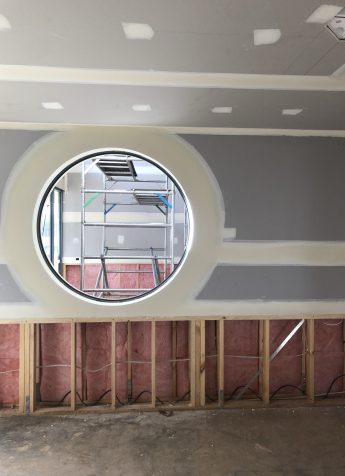
Ok, a question that i get asked a fair bit is how do you install plasterboard on to a timber framed stud wall. Well the first thing you need to do in measure the height of your ceilings. Why? Because if its 2.4m high the you can order 2 x 1200ml wide sheets. If it is 2700 high you can order 2 x 1350ml sheets. Plasterboard comes in these widths only, 1200ml and 1350ml(wide not length). Now if your ceiling is 3.0m high then you would use 2 x 1200 sheets then get 1 more 1200 sheet that you cut in half at 600ml. Just take a look at the right picture, i am installing the 600ml wide sheet first then i will put a 1200ml wide on top of that then another 1200ml wide sheet on top of that, making a total of 3.0m high.As you can see, on 3.0m high ceilings you always start with the 600ml wide sheet first. Why you ask? This is so you can reach the join easy when you trowel it up, if you put it near the top you will need a ladder to reach.

Anyway, before sheeting the wall you need to put insulation in, if the client wants it and you need to put the stud adhesive on the wall prior to putting the sheet on. Now a sheet is normally 1200 wide so in this case you would put daubs of stud adhesive at 200ml, 400ml, 600ml and 800ml on each timber stud. The top of the sheet is screwed or clouted and the bottom of the sheet is screwed or clouted. Do not put screw or clouts in the middle of the sheet. Later they will break the paper surface of the plaster and show through. If your sheeting big sheets like a 4.8m long or 6.0m long sheet, you can put some screws in the middle to hold it back till the glue sets. But remember to take these temporary screws out after and just plaster the little hole up, if you leave it in it will pull through the plaster down the track.

Well i hope this helps you DIY types and remember, the first thing you do before sheeting any wall be it timber or steel or brick is to measure the height of your ceiling so you know the right type of sheets to get. #howtoplasterawall

Regards all

Phillip Cordwell – http://ptcplastering.business.site

How to plaster a wall