How Much Insulation Do I Need

How Much Insulation: Guide to work out quantities

Ok, so you have demolished all your walls in your bedroom and you are now ready to plaster them with new Gyprock plasterboard. One major component you should really consider is am i going to insulate. Me personally i would insulate every wall in my house and as we speak i am actually doing this to my own house now. I am using a soundproof insulation though which offers great noise reducing properties but is quite expensive per bag. Most new houses are insulated with R 2.0 wall batts and only on the external walls, which for me personally you might as well cop the extra expense and do the whole house while it is an empty shell. #insulatebeforeplaster

Anyway that is not the point i am trying to make here today. What i would like to discuss with you all is how much insulation do you actually need to buy to insulate your chosen room. Its simple really. You need to measure how many square meters the room actually is, remember i am only talking about walls here not the ceilings.

First thing you do, if its a square/rectangle room, is measure the width x length. Now say for example your bedroom is 6 metres long x 4 metres wide and the ceiling height is 2.7 meters high, a big bedroom hey, well then to get the square metres of the room you would add together 6 x 4, the room length and width, then x 2.7 the room height. So that would be 6 x 4 x 2.7 = 64.8 square meters. That will give you the total square metres for your walls in your bedroom. If you want to insulate the ceiling also, then you only times together the walls which is 6 x 4 = 24 square meters. For this example only we will stick with walls only, most people leave there existing ceiling and renew the walls only.

So after that calculation you need 64.8 square metres of insulation. This is great because when you buy insulation there is a sticker on the bag telling you how many square meters that bag will cover. See picture below.

IMG_2791

You see on the bottom there the coverage is 4.5m2, well that is the only information you need to know to work out how many bags to buy. So for this example, mind you this insulation is the expensive soundbatts not the normal r2.0 wall batts, which have a much bigger coverage area per bag, we would divide our room by the coverage area of the bag.

Now lets calculate that: 64.8 square metres is your room and the coverage per bag in the photo is 4.5. SO 64.78/4.5 = 14.39. So for this example you would need 15 bags of the expensive R2.0 soundbatts to do the walls only in your bedroom. But that is if you use soundbatts because there is not as many per bag compared to normal R2.0 wall batts. I think from memory there is 6 per bag in sound batts and there is 22 per bag for normal batts.

Well i hope this helps you guys out when your trying to work how much insulation you need for your job, just remember work out the square meters and you can from that work out how many bags to buy…

Oh and if your not in a store to look at the bags, just get the rep to check the square meters it says on the bag of the insulation you want and you can do the math at home.

Anyway happy insulating everyone, this is a job i normally palm of to the apprentices lol, i have done plenty of insulating in my plastering lifetime. #howtoinsulate

Regards

Phillip Cordwell : http://ptcplastering.business.site

Feel free to follow my blog to get my latest posts.

Drywall Repair

Patch Drywall – Patching big holes in Plasterboard

Ok. You might have a patch like this and here are some basic drywall repair notes to keep in mind. Firstly find out what the cause of the damage was in the first place. If it is say for example water damage make sure the problem is fixed first before even attempting to patch or you will have to patch again later. Once that is sorted you need to cut out the damaged area into a nice square shape in which you will replace with new plasterboard. Once hole is cut put some timber blocks around edge of cut out hole so you can replace with new plasterboard. As seen below top left.

Now once you have sheeted the new plasterboard, you will need to tape this border with paper tape so it does not crack back out later down the track. Once you have done that, as it sets you scrape off any high areas in preparation for the second coat which i have done in the picture below bottom left. Again as this drys make sure you scratch/scrape of any high areas again in preparation for the top coat. Now your first 2 coats were done with a base compound as it sets hard and holds the tape in from cracking. The final coat is the top coat, which basically allows you to sand back the patch to a smooth finish ready for painting. I do recommend though when sanding always use a light to show imperfections up so you can patch before painting. #drywallrepair

Regards

Phillip Cordwell – http://ptcplastering.business.site


How to plaster a wall.

How To Plaster a Wall – Basic Sheeting Help

Ok, a question that i get asked a fair bit is how do you install plasterboard on to a timber framed stud wall. Well the first thing you need to do in measure the height of your ceilings. Why? Because if its 2.4m high the you can order 2 x 1200ml wide sheets. If it is 2700 high you can order 2 x 1350ml sheets. Plasterboard comes in these widths only, 1200ml and 1350ml(wide not length). Now if your ceiling is 3.0m high then you would use 2 x 1200 sheets then get 1 more 1200 sheet that you cut in half at 600ml. Just take a look at the right picture, i am installing the 600ml wide sheet first then i will put a 1200ml wide on top of that then another 1200ml wide sheet on top of that, making a total of 3.0m high.As you can see, on 3.0m high ceilings you always start with the 600ml wide sheet first. Why you ask? This is so you can reach the join easy when you trowel it up, if you put it near the top you will need a ladder to reach.

Anyway, before sheeting the wall you need to put insulation in, if the client wants it and you need to put the stud adhesive on the wall prior to putting the sheet on. Now a sheet is normally 1200 wide so in this case you would put daubs of stud adhesive at 200ml, 400ml, 600ml and 800ml on each timber stud. The top of the sheet is screwed or clouted and the bottom of the sheet is screwed or clouted. Do not put screw or clouts in the middle of the sheet. Later they will break the paper surface of the plaster and show through. If your sheeting big sheets like a 4.8m long or 6.0m long sheet, you can put some screws in the middle to hold it back till the glue sets. But remember to take these temporary screws out after and just plaster the little hole up, if you leave it in it will pull through the plaster down the track.

Well i hope this helps you DIY types and remember, the first thing you do before sheeting any wall be it timber or steel or brick is to measure the height of your ceiling so you know the right type of sheets to get. #howtoplasterawall

Regards all

Phillip Cordwell – http://ptcplastering.business.site

How to plaster a wall


How to BOND sheets to brick.

Ok new job today with something new to explain. I am working here at the St Helens Anchor Wheel Motel and i need to sheet PAINTED brick walls. This is known in my industry as Bonding.

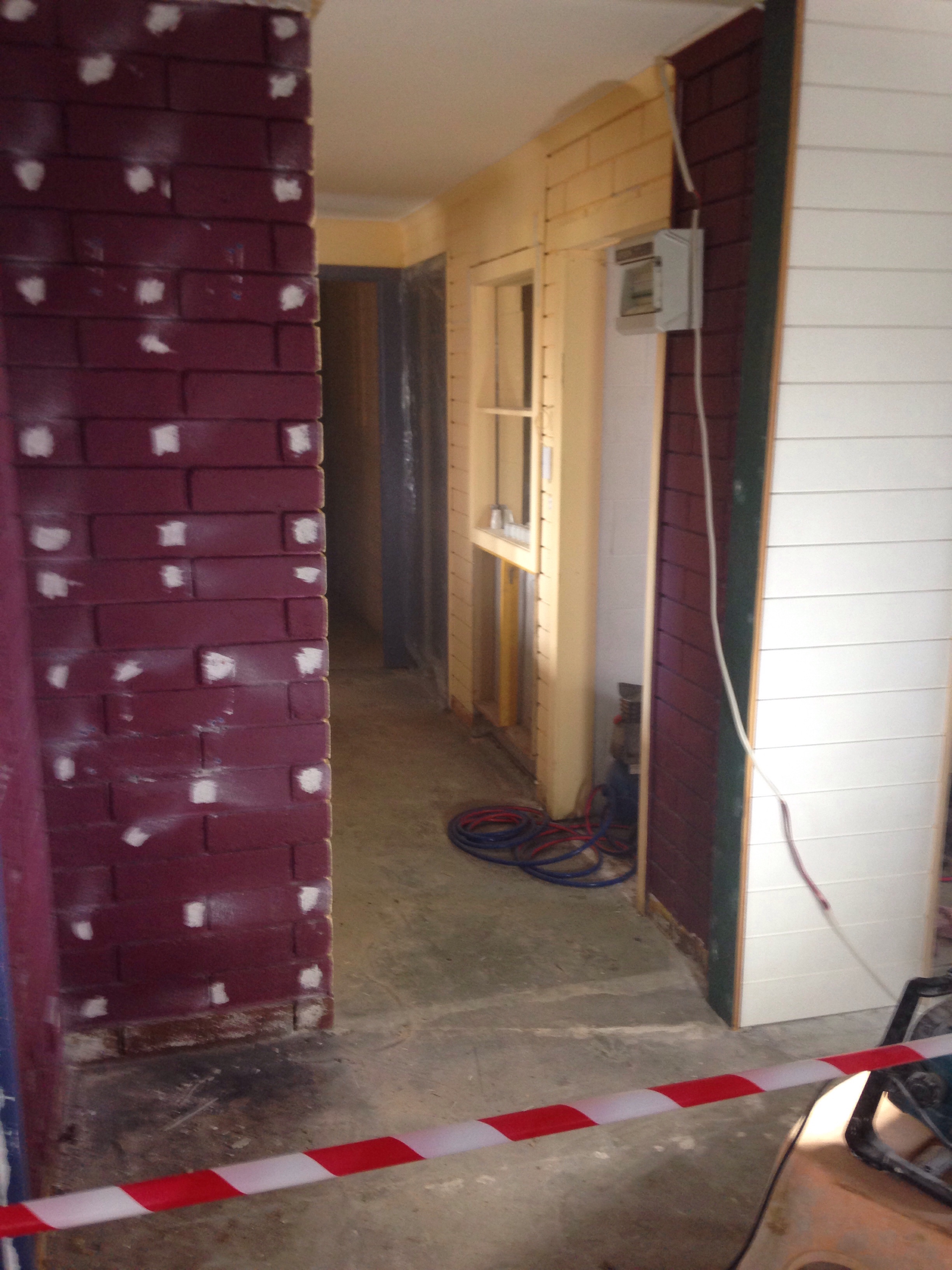
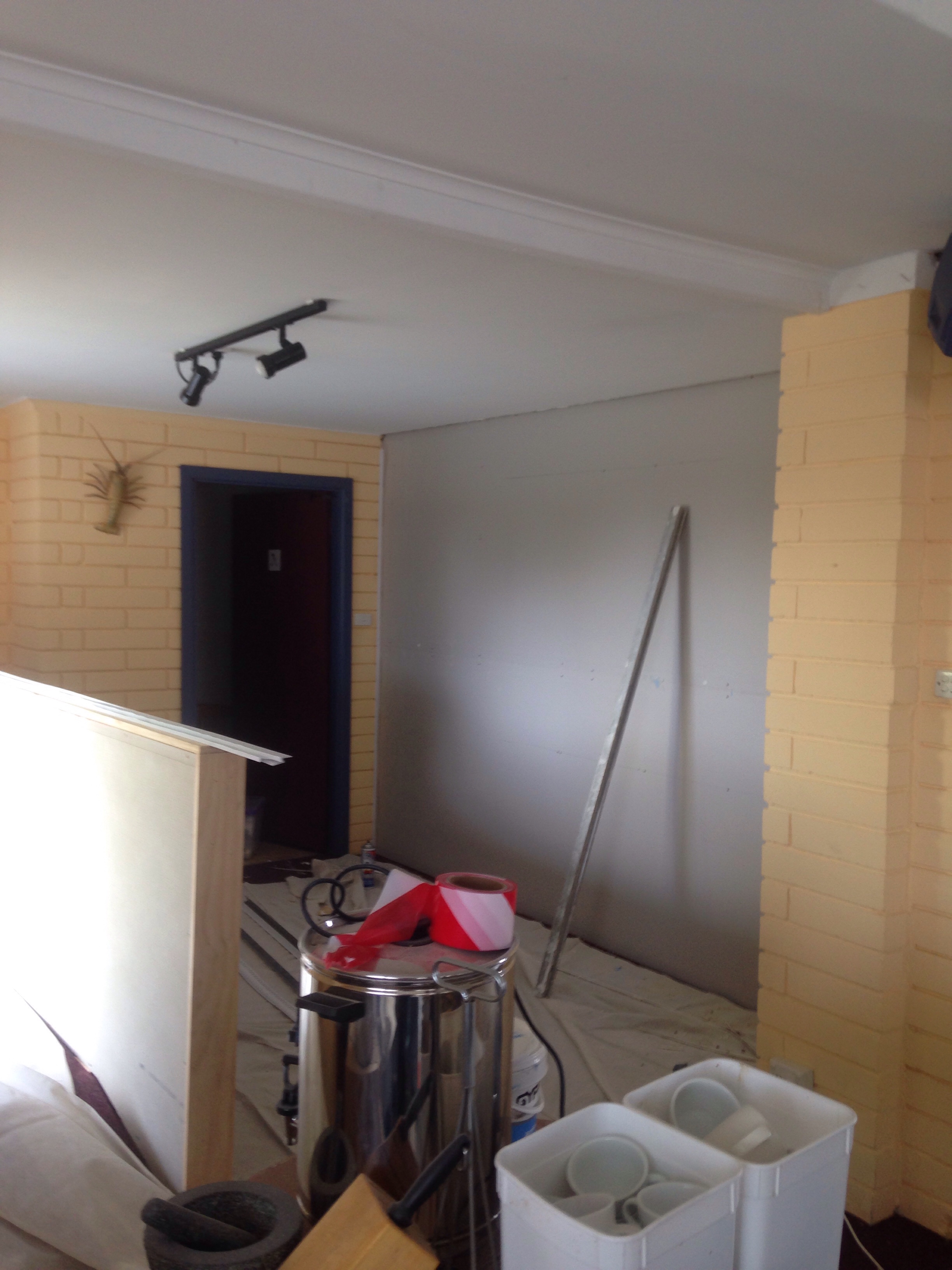
The picture on the left shows a brick wall that has been prepared to sheet. The right when its done. Now to bond the plaster to these bricks, first you must grind(use concrete cutting disc) the paint off back to original brick, because it will not stick to paint. Usually every couple of 200ml spots will do. Secondly you must mix water with bond crete(special bonding agent), and then mix that with cornice adhesive to get a sticky consistency. Once achieved you grab your 4inch blade and put daubs of the mixture onto the grinded back areas.

Its advised you have all sheets cut and ready as the mixture sets quick, once all sheets placed onto brick wall, hit them hard with something straight, no not your level, i use a 2m steel tube, as you can see in background, and your done. You can prop the bottom with timber till mixture sets to ensure architraves go on straight. So thats it you have bonded brick walls and they will not fall off. 🙂

Phillip Cordwell – http://ptcplastering.business.site

http://www.phlthecracks.com